Some story behind Like me
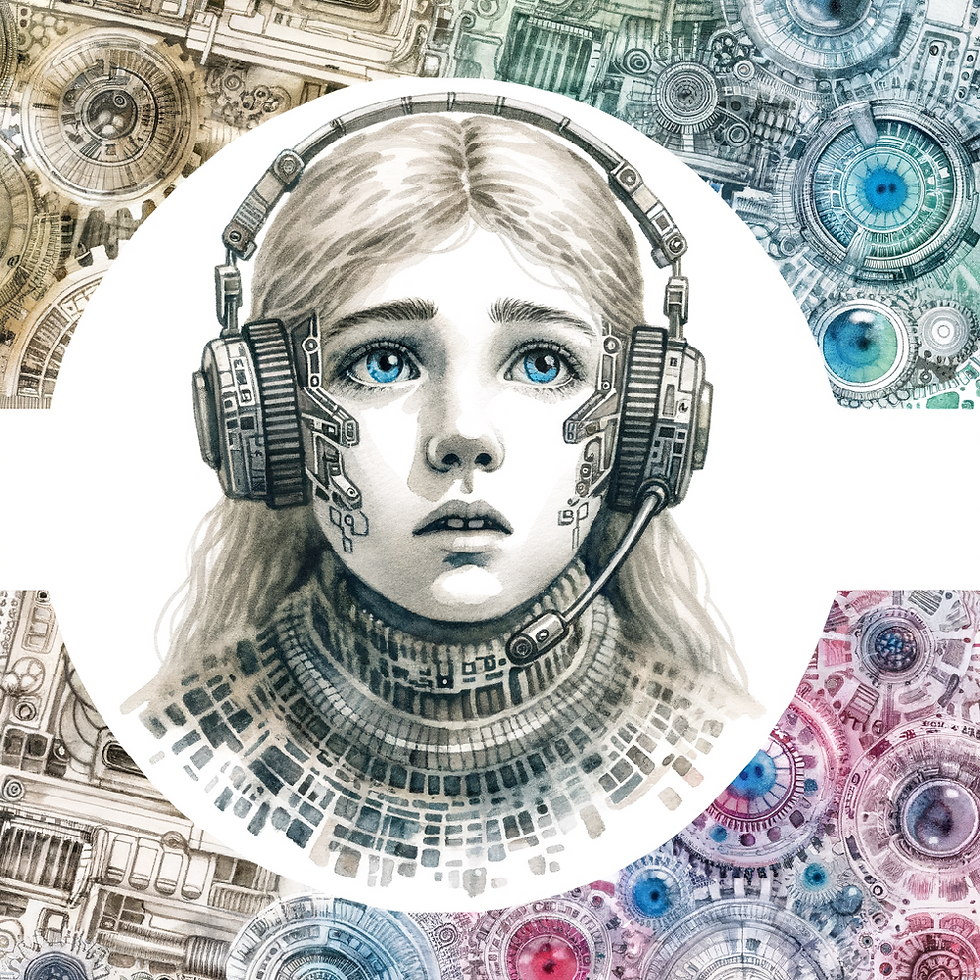
Sharing an interview I did with the amazing Lila from The Cage www.cageriot.com/the-cage
Hello ida, we’re thrilled to have you here for this interview! We've had an amazing time exploring your music and diving into your creative journey. Now, we’re even more excited to get a deeper look into both your brand and your personal and professional inspirations.
Ida. OMG I don’t think I have a brand, do I?
Q. In terms of your creative journey, what role has Vid played beyond just being a producer? How does his input balance with your artistic vision, and what unique perspective does he bring to your music?
A. The first thing Vid showed me was the words to ‘Emily’ and it made me smile, but I thought, underneath, he understands how insecure girls, women are. We all think the other girl is perfect. If we have blonde hair we want dark hair, if we have blue eyes we want brown eyes, if our hair is straight we want it curly. If its curly we want it straight, you know?
I was super insecure about singing. My ‘creative journey’ has mostly been Vid dragging me down that road by my hair, kicking and screaming. I’m super grateful to him for that.
Q. The recording environment was described as "pretty scrubby" at first. How did that setting impact your performance and the sound you created? Did it help you relax or challenge you in unexpected ways?
A. I think it really helped. It was just Vid playing guitar and me in an odd, little room. If I had found myself at somewhere impressive like middle farm or something, with a crowd of cool musicians, I’d have panicked. Imposter syndrome would have overwhelmed me. Later, after the first tracks were produced and the crowd of cool musicians had done their work, behind my back as it were, I was sort of shocked. It didn’t sound like the me in my head. It was good. I sounded good. It gave me so much confidence.
Q. You’ve shared that you were hesitant about performing live at first. How has your approach to live shows evolved since playing at the Green Note in Camden, and how does that compare to the vulnerability you feel when recording in the studio?
A. Laughs. I think, for ‘hesitant,’ read 'terrified.' Open mikes at the green note are super friendly and relaxed and supportive. I really recommend them. Playing live is still a huge hurdle for me. I’m learning to play the guitar. I think so I have something to hide behind. The idea of a paying audience that I could disappoint still terrifies me. I’m working on it.
The studio is easier. We have normally spent quite a while working on a song and I have it inside me, have it technically. We don’t go into the studio unless we have mastery of it. The studio is often a first chance to feel it. Its an emotional thing. I love that now, its where some sort of weird magic happens.
Q. The title to "Like me" seems to have dual meanings, a statement and a plea. How did you land on this title, and what does it signify about where you were emotionally during the creation of the album?
A. I was always tempted to try a YouTube channel, but never confident enough to put myself out there. I admire all the girls who do. We had talked a lot about the ‘why?’ Why girls risked rejection, exposed themselves to the trolls. And I reckon there has to be an element of seeking affirmation in there. If they like my video they like me. And the choice of song. It takes a sort of courage to take that risk and the reward can be feeling loved. A ‘Mac brat-pack heroine.’ And despite my fears I wanted that. I was like the others and yes I think I have always longed to be liked. I don’t think people easily like me. They thought I was a good person, but they never really liked me. I was never the popular girl.
And in ‘Ground’ Loving someone who probably wont leave his wife, that’s a sort of courage too. I don’t recommend that relationship, but I admire the courage. Its another sort of emotional charge of the light brigade. The charge should get medals, even if it’s a disaster.
Q. There’s a deep, universal theme of searching for acceptance in your music. How do you hope your audience relates to that search? Do you believe your music offers a sense of belonging to those who may feel similarly displaced or unheard?
A. Were all the same aren’t we. All insecure. Vid told me this story about Julia Roberts – the actress, you know, at the height of her fame, just after ‘Pretty Woman’ when everyone thought she was the most beautiful woman in existence. Well, in an interview, she said how much she hated her feet and thought they were really ugly.
I really, really hate my toes, - they look Pterodactyl, gnarly to me - but hearing that Julia said that made me feel a bit better about it. Just more normal, you know?
Q. "Like me" is an album deeply rooted in personal experiences, from your childhood to bad relationship choices. How do you feel your upbringing influenced your perspective on relationships, particularly friendships with girls, and how does that reflect in your music?
A. My Mother died when I was three and I got shunted around a bit, I ended up with my grandmother and she died when I was thirteen. I think anyone who has been deserted or abandoned will tell you it seriously undermines your self-worth. Its not logical, but it sinks in deep. I feel all girls are desperate to be accepted and their friends are super important to them, but maybe I felt it a bit more than some. Then we swop that with being boy crazy and for me low self-worth made that a dangerously bumpy ride. So I guess I have a lot of ugly toes to share.
Q. We are so sorry to hear of the loss of your mother, how did that experience affect your upbringing and then subsequently shape your music? Where do you feel you are now in relation to that loss and its impact on your life and art?
A. I think I have a long, long way to go. I am damaged. We did write a song, a letter to my mother, but at the time I didn’t want to share it. It felt too mundane, too ... everyday. I suspect I’ve just scratched the surface so far. I started that ‘letter’ – “Dear mum, I’m still alive. I grew up tough and terrified.” Grief and loss hangs around, waits for tiny triggers and swoops in when you aren’t expecting it. This music thing is therapeutic though. I probably wouldn’t talk about this shit if I didn’t sing it. For me therapy isn’t something to become reliant on, it’s a tool to move on, too find your strength and purpose. Its no bad thing to risk being emotionally tough enough to open yourself to new feelings and express them – expose them to the world.
Q. You’ve mentioned that "Asta" represents a brighter, more melodic part of your childhood. Can you dive deeper into why that song stands out to you in terms of emotional significance and its connection to your personal story?
A. I was sort of spinning, adrift, miserable when I met Asta. I was struggling to adapt to a new family, new country, new culture. I had a weird accent, and was teased to the point of refusing to speak to anyone. I had no friends. I felt deeply alone and unloved. She was volatile, but she was a popular kid and I was never sure why she let me latch onto her. But latch onto her I did and she was a bit of rare stability and joy. We quarrelled and even physically fought each other, but she never completely let go of me. I really love her for that and I truly believe she saved me. I really think I could have been a teenage suicide if she hadn’t been there.
Q. You've said that "Girlfriends are super important to girls, but girls can be ruthless if you don't fit in." Do you feel like this message is something that resonates with your listeners today? How does this idea of fitting in or being "out of place" echo in your music?
A. That’s the reality of growing up as a girl. You are desperate to fit in and be accepted. Girlfriends, best friends, are vitally important and rejections are miserable. “love and envy intertwine. Along the friendship fault lines” as I say in ‘Asta.’
I think social media may have made the turmoil faster, but I feel its still true for most girls. It is mostly girls who listen to my music. I mean that might have something to do with not having an Olivia Rodrigo’s sex appeal or cute smile, but I hope it’s also cos girls recognise what I’m saying. I remember listening to Sasha Sloan’s ‘Too sad to cry’ and thinking “ oh, OK, maybe it’s alright to be desperately miserable. To be failing.” I think there’s an important place for that. Oh, and I’m not saying boys don’t have their demons to ride too. I think growing up a boy at the moment is really tough. A lot of guys I meet seem to be struggling with their role and feeling unvalued. Which is super sad.
Q. Your music touches on some heavy themes, including loss and the search for belonging. What was the most challenging part of translating such personal stories into music, and how did you ensure the emotions came across authentically?
A. Essentially I dump on Vid and he’s a wordsmith, he offers words and increasingly we’ve been working on finding details to tell the stories. He’s a writer and he’s been pushing me toward ‘show don’t tell.’ You know? Like not ‘ I was annoyed’ but ‘I stomped up the stairs and threw open the door.’ I hope the next album will be a lot more narrative in that sense.
I don’t know if I’m authentic. I hope so, I’m not sure I’m articulate or smart enough to be inauthentic. I mostly just be me and what comes out, comes out – and Vid tries to make it rhyme.
Q. You’ve said that your producer Vid suggested the album be called "Five Boxes of Tesco Tissues," a humorous take on your personal stories. How do you balance humor with the emotional weight in your music, and how does that play out in the overall tone of the album?A. I think it was a very English thing to say. I did cry on him a lot. But, although I have bad moments, I am often a happy person these days. On our playlist of inspirations we had several tracks by Erin Ockocki (Rorie Music), who aims to ‘tell stories of heartache and hope.’ She has had some hard breaks in her life – our song ‘Erin’ is about her; I love her because her hope always defines her more than her heartache. Ultimately, I’d always want there to be more light than shadows.
Q. "Like me" feels like an emotional reflection on personal growth. What do you want listeners to take away from this album in terms of your journey as an artist and the challenges you've faced along the way?
A. We’re all Julia Roberts, we’re all a little beautiful, but we all think we have ugly toes. Be humble, be scared, but be thrilled. Try it, whatever it is for you, how you sound might surprise you.
Q. Thank you so much for opening up about such incredibly personal topics. There’s no doubt you will have helped so many people deal with their own circumstances that might be similar. Now that you've shown fans both your depth and creativity, there’s no doubt they will want to know, what does the future look like for you after "Like me"? Are there new directions you’d like to explore, either creatively or in terms of performance?
A. I think in this album we were working out how to work together. We sort of threw a collection of ideas and feelings in a box and shook them up and saw what floated to the top. I am super excited that the next one will be more coherent, at least stylistically.
We argue constantly, but it’s constructive. We respect each other a lot. And more and more we know what we want it to sound like. I’m actually an all-over-the-place sort of girl, so its never going to be that coherent – that definitely wouldn’t be authentic 😊- but it feels like it might flow better and be easier to follow. Hopefully it will be more ‘me.’
And I recently met someone who I am hoping will be beautifully positive in my life, so I’m hopeful I’ll be less focused on broken heart shards from my past and feeling more joy about my present.
ida, thank you so much! We appreciate you taking the time to talk to us.
ida. Thank you. Its huge. That anyone wants to listen to me singing or hear about me. You can’t know how huge – like, I just cry, it’s so huge. Thank you! I hope people will say ‘Hi’ on social media I’m not your next therapist, but I’ll definitely say Hello
You can find the orignal article here: ida unveils powerful debut album ‘Like me’ and connects with us to discuss its deeply personal journey

Comments